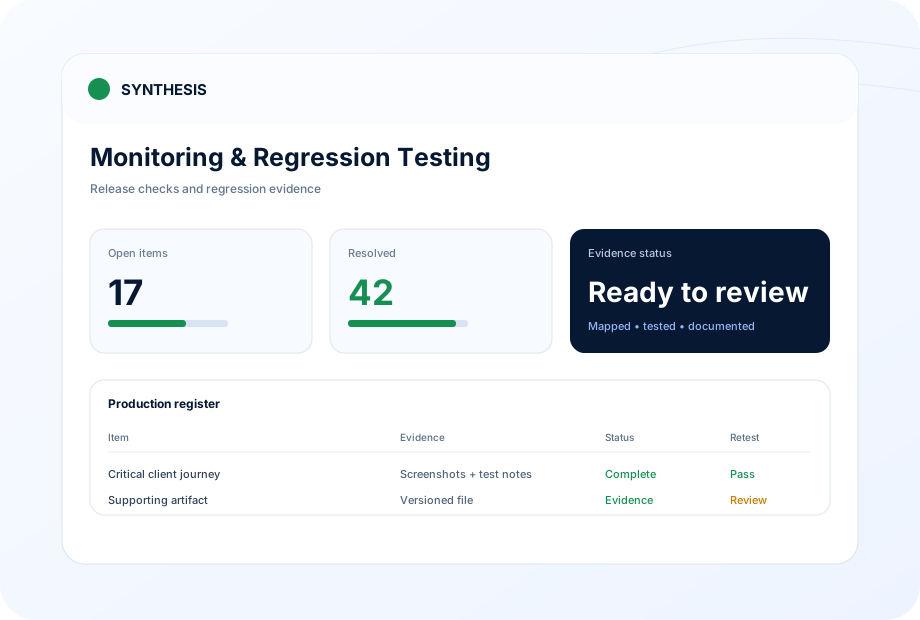
A recurring technical check for websites and products where ordinary releases, content changes and third-party components can reintroduce accessibility defects.
Define the agreed pages, components, journeys and checks used as the comparison point.
02
Scheduled checks
Repeat the agreed automated and manual checks on the chosen cadence or release event.
03
Regression detection
Identify new or returned accessibility problems against the baseline.
04
Prioritise
Classify regressions by severity, impact and release risk.
05
Reporting
Deliver a monitoring summary, evidence and recommended repair scope.
06
Retest / verification
Verify agreed fixes where retesting is included.
EXAMPLE WORK
Accessibility Regression Gate for Releases
INDEPENDENT DEMONSTRATION CASE
Open a representative production case with before/after evidence, issue status and downloadable artifacts. It is demonstration work, not a client claim.
Monitoring reduces the chance that known defect classes return; it is not continuous proof that every state of a changing product is conformant.
Frequently asked questions
How often should monitoring run?
It depends on release frequency and risk. Monthly or release-triggered checks are common starting points.
Is monitoring automated only?
No. Manual checks can be included for critical journeys and known regression risks.
Do you fix issues automatically?
Fixing can be a separate bounded remediation task or part of an agreed ongoing arrangement.
Do I need an initial audit first?
A baseline is strongly useful because monitoring needs something concrete to compare against.
Is this legal advice?
No. SYNTHESIS provides technical implementation, testing and documentation. Legal applicability and final legal interpretation remain with the client and their advisers.
Need the specialist production done?
Send the asset and required outcome. We will confirm scope, price, evidence and handover before production starts.